
Accommodation: Samba
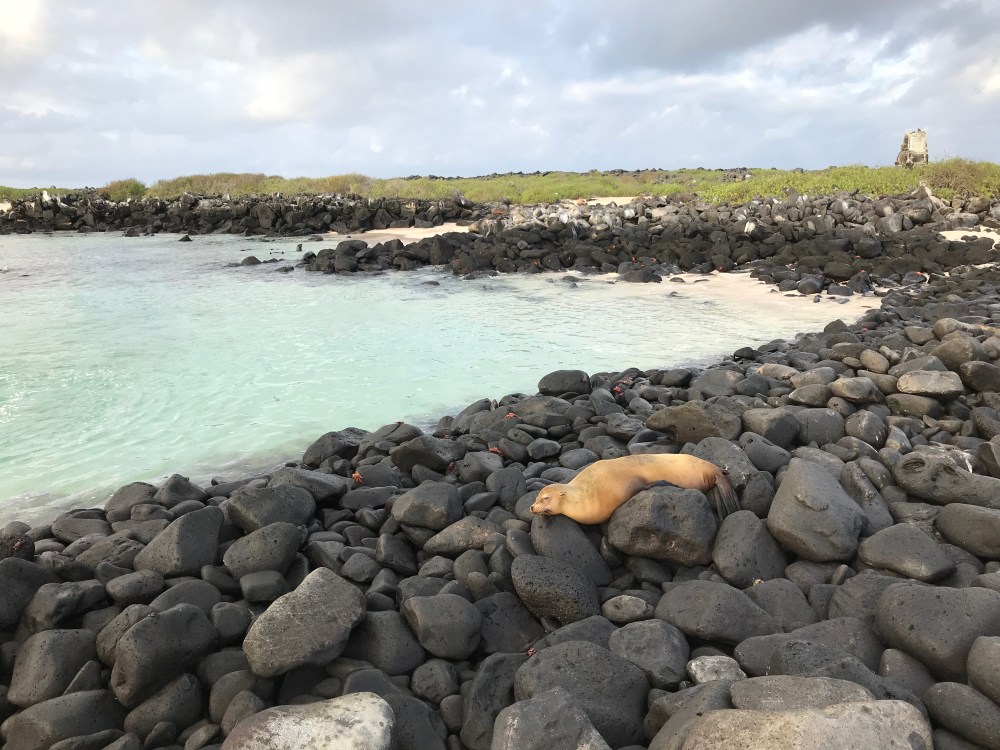
The early morning of our third day in the archipelago directed us eastward to the island of Espanola, the oldest Galapagos Island. Here, we had our first intrusive encounter with a sea lion colony.
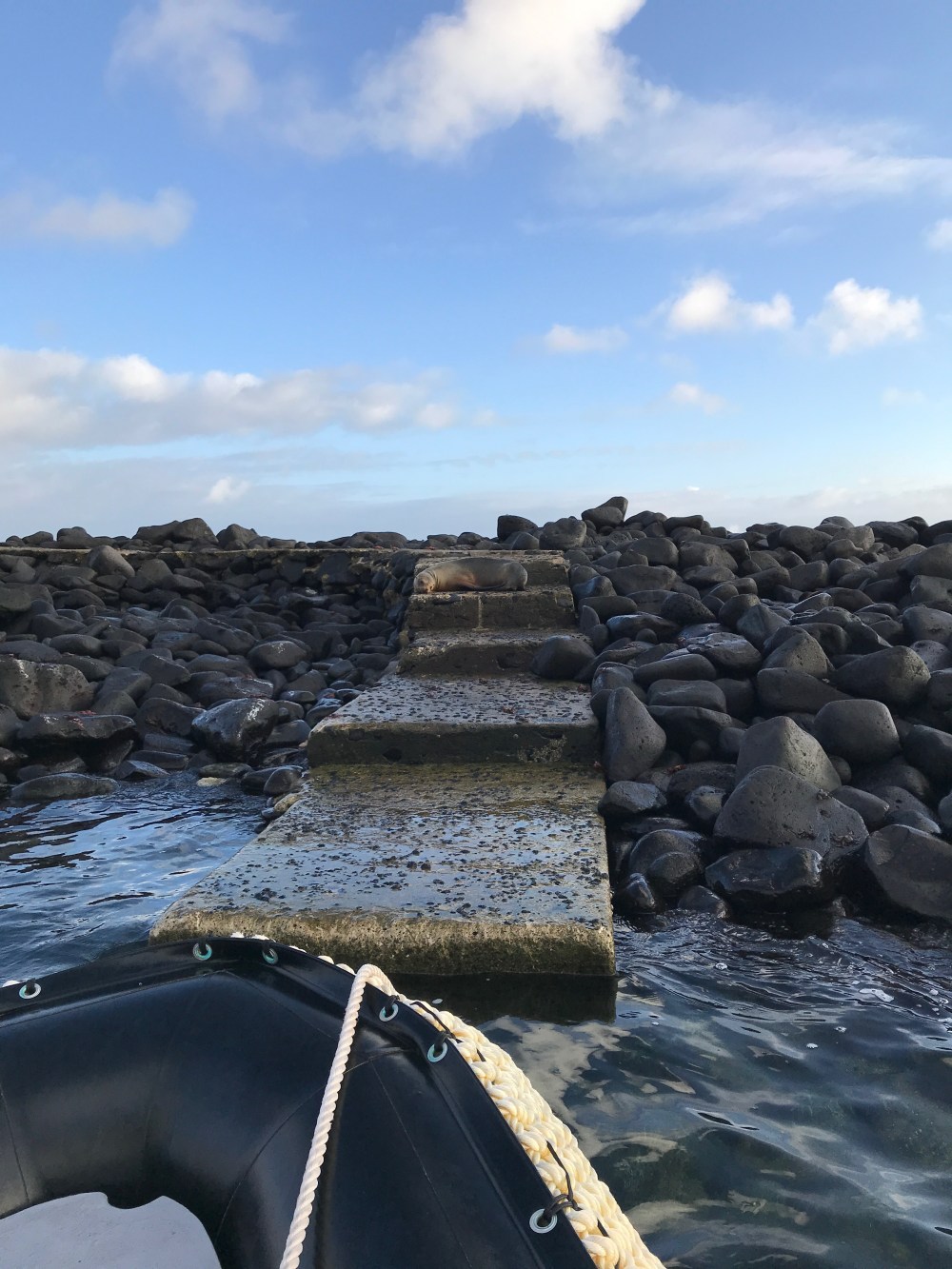
The sea lions found in the Galapagos never cease in their hilarity, It is absolutely incredible that such large creatures, with only fins as appendages, can move as quickly as they can. Not to mention that they end up laying in the most peculiar and seemingly uncomfortable positions imaginable.
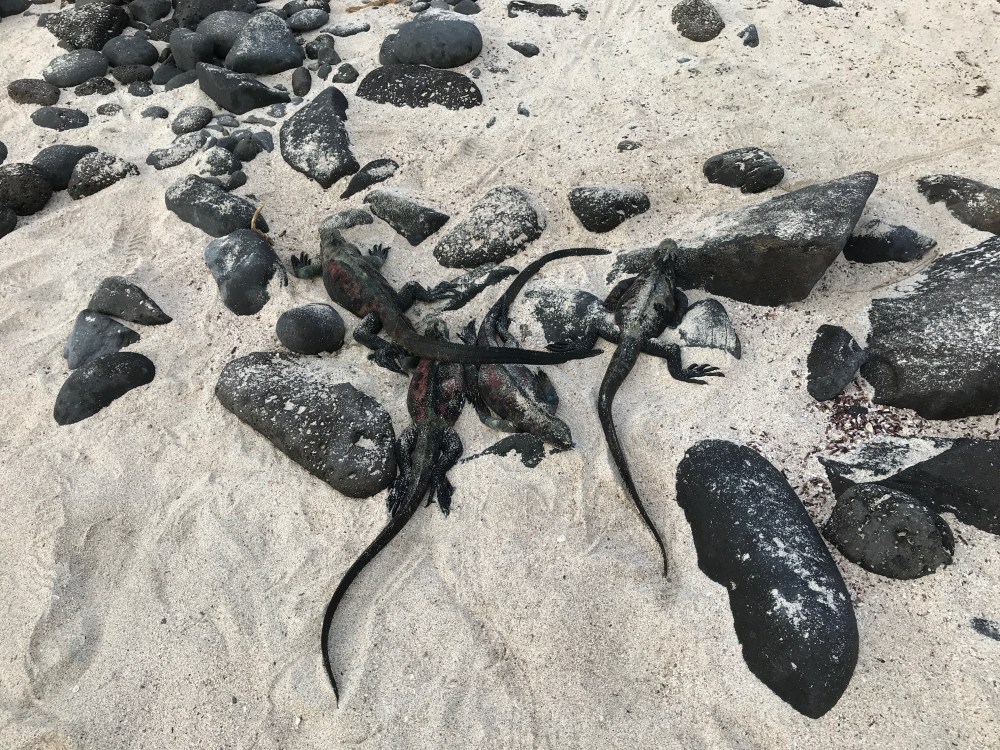
As entertaining as the sea lions always are, they are hardly the only form of live that makes Espanola its home. Here in picturesque fashion, the Galapagos marine iguanas lay in piles on the rocks and sand along the coast. These iguanas are one of the few species that live on land, but head to the sea to eat algae living on the coral beneath the surface. They can hold their breath for over half an hour and after feeding, return to the coast to bask in the sun.
The Galapagos is home to three different booby species and as we moved inward on the island we discovered our second species, the Nazca Booby. This particular species does not have a distinct foot color but does dance in booby fashion in order to attract a mate. Their very distinctive from other species given their black and white pattern and almost duck-like beak. The most fascinating aspect to these boobies is how their young develop. In the Nazca variety, only one baby can survive, regardless of food availability or climate variability. If more than one egg is laid and hatched, the two chicks will fight each other to the death with zero intervention from their parents.

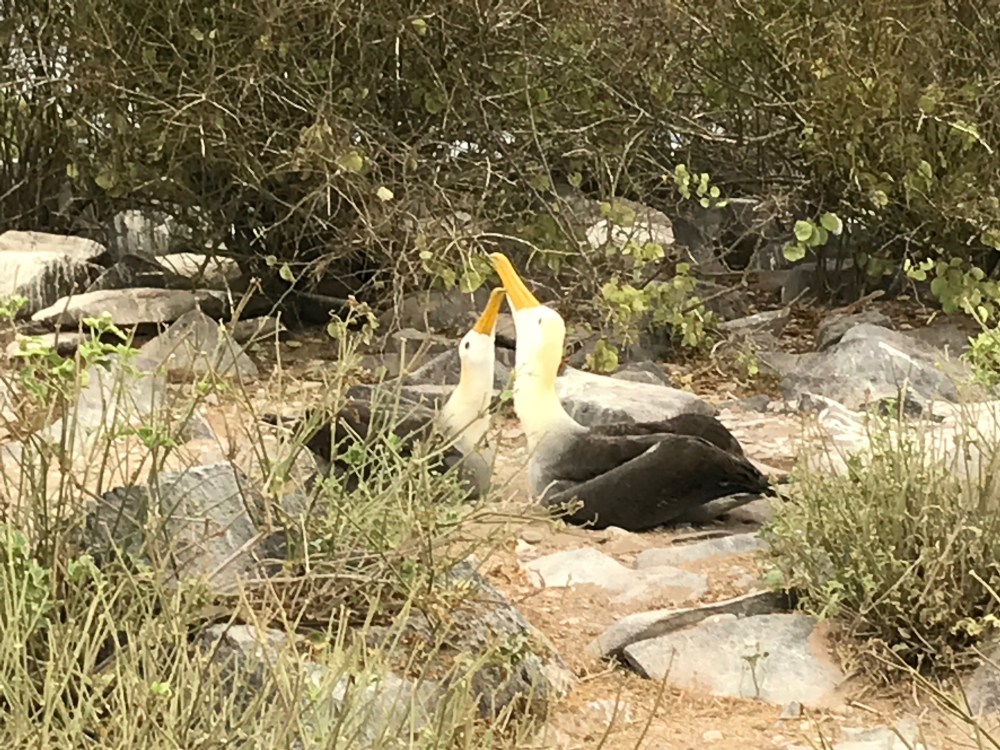
Not too far from the Nazca Boobies, lives a very large colony of waved albatross. These are the only tropical albatrosses in the world and can have a wingspan of up to eight feet! We were extraordinarily lucky to have stumbled upon them during their mating season. Like other birds we have encountered on this trip, they have a specific ritual involving a bouncing strut, bill clacking and mimicking that can last for hours but unlike the other birds, they mate for life.
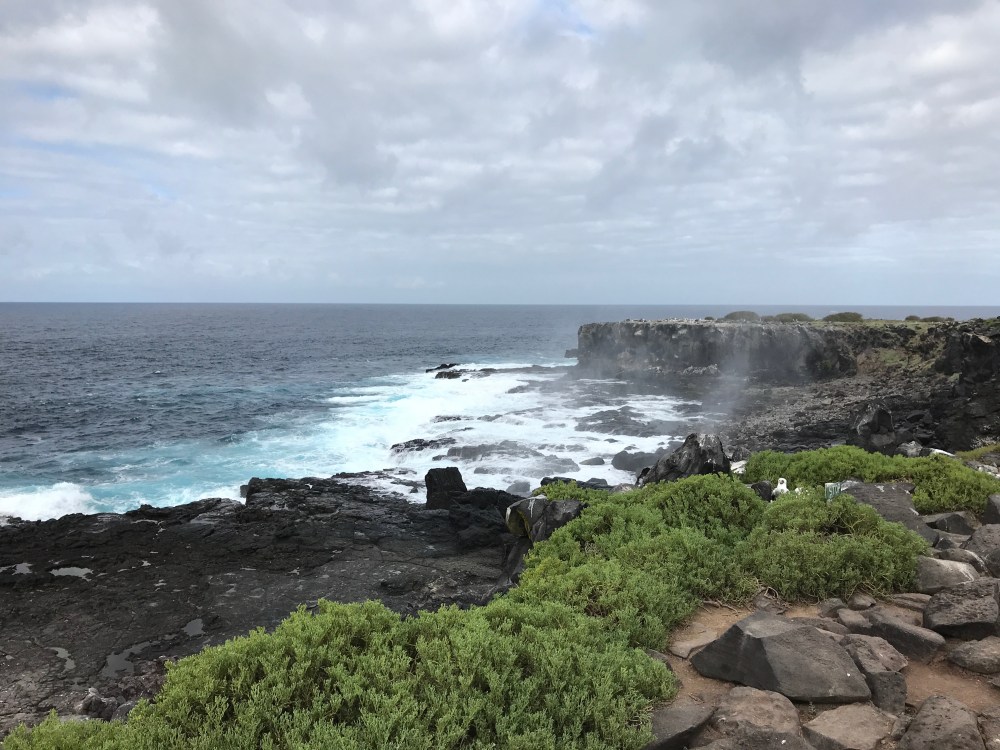
Our hike ended that morning with a stunning view of the ocean from a magnificent viewing point. This shore has one of the rockiest, but did distract from its sheer beauty.
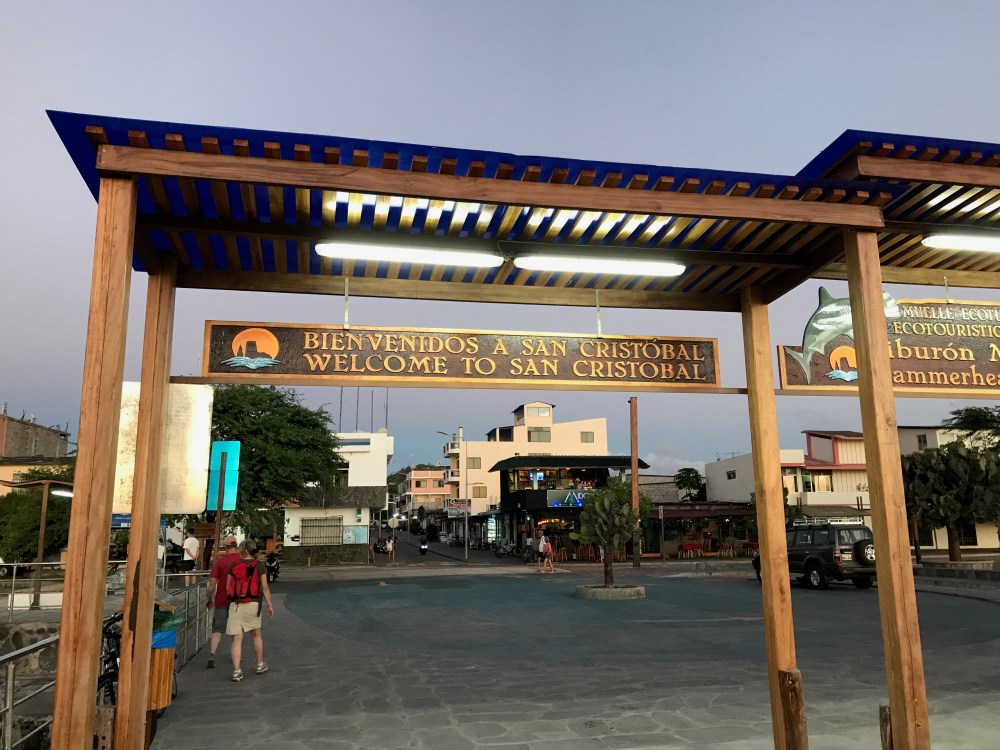
After our lunch and snorkeling excursion, the Samba headed northeast to San Cristobal where we enjoyed a quiet evening exploring the small, coastal city.
Featured Image: An Oystercatcher patrolling the shores of Espanola Island

thanks for sharing your journey to part of this world. enjoying it a lot.
I’m glad you’re enjoying it Sandy! More posts to come over the next couple of weeks!