
Accommodation: Samba
Day 7
On the eve of our last day on the Samba, we were able to take it relatively easy and were on our way to James Bay, on the island of Santiago. After an 8:30a zodiac ride to the bay, we were welcomed by a display of native flora and lava flows.
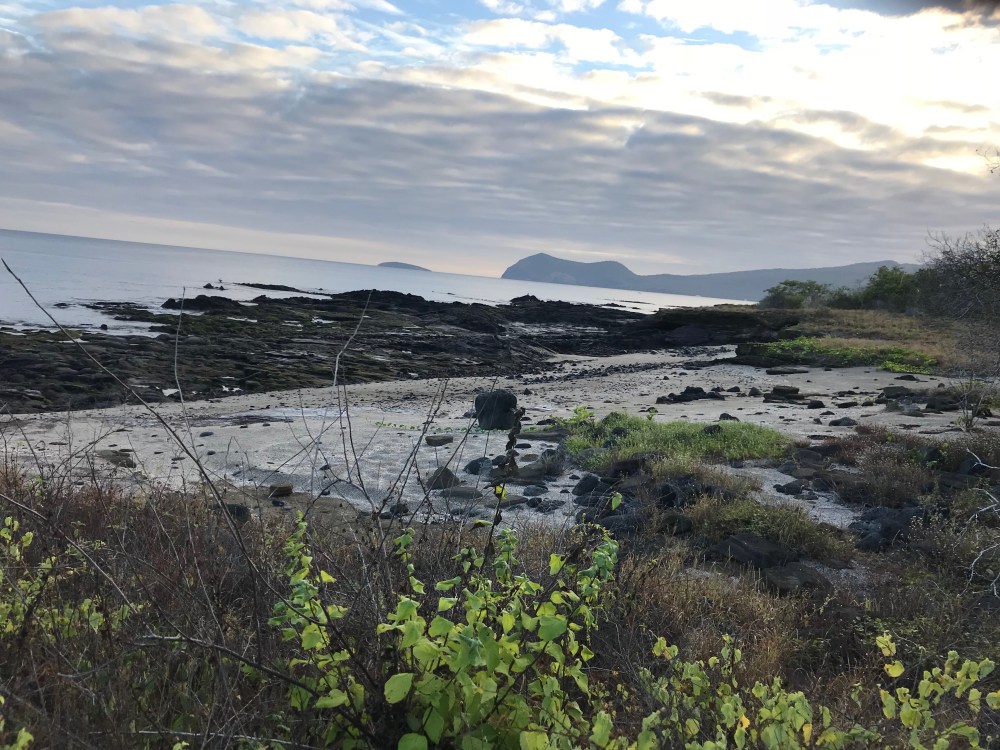
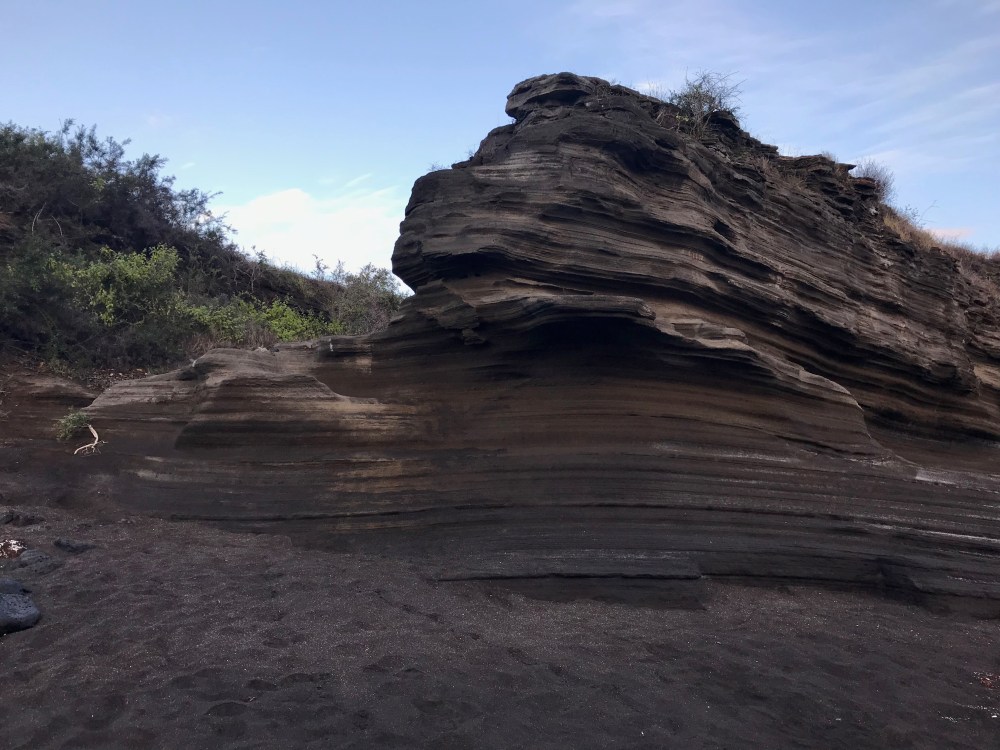
Our hike was a relatively short one as we walked around the volcanic lava fields that make up the islands. While most of the wildlife we saw during our morning hike was familiar to us, the highlight of the island was stumbling upon the native fur seals that make the lava tunnels their home.
 If you’re thinking the same thing I am, you’re wondering how the fur seal ended up on that ledge inside of the tunnel. Seeing how seals can’t fly and aren’t known to be very good climbers, they wait for the tide to come up and they easily scoot of the ledge. They’re known to nap for hours on end and only come down when the tide allows.
After moving off of James Bay, we headed over to Rabida where we greeted by a wall of crimson. This spectacular display is unlike any other beach we’ve seen to this point and on that is absolutely striking.
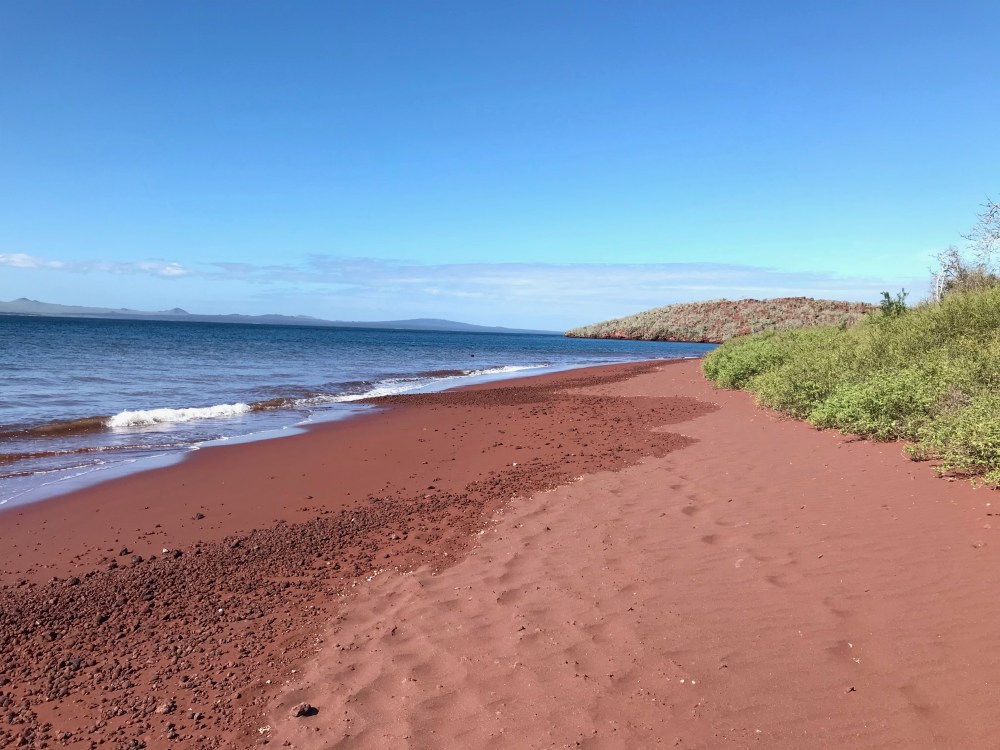
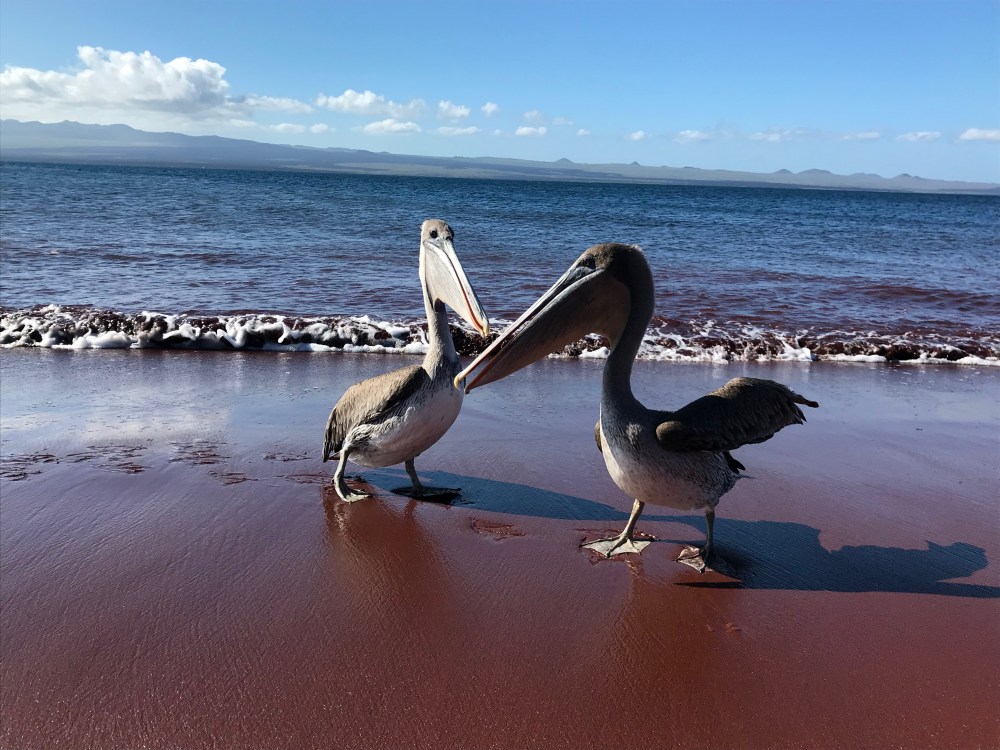
The deep crimson color of the sand is exclusive to Rabida within the Galapagos and is caused by lava rich in iron and after millions of years of oxygen exposure, turned the sand red. Not only is it a beautiful color, its also one of the softest beaches to walk barefoot in. Lauren and I were extraordinarily lucky during this stop to be able to spend about and hour and half doing nothing but swimming along the shore and relaxing on the beach; all in all a perfect way to end our last night on the Samba.
Day 8
Our last day in the archipelago was a half day exploring North Seymour where we were able to get the best shots of the Galapagos most notorious birds – the Blue Footed Booby. North Seymour is home to one of the largest Blue Footed Booby colony and is a fantastic way to end our cruise. Not only were we able to see the colony itself, but on several occasions we were able to witness the mating ritual of many pairs. The blue feet (to the surprise of anybody) are used to primarily by the males to woo potential females. The males we ‘dance’ in front of the female to show off their bright blue feet. Usually the females are looking for the male with the brightest feet as its a firm indication that the male is well feed and well bred. For those boobies that don’t have the brightest feet, often times the male will present the female with a gift, such as a stick.
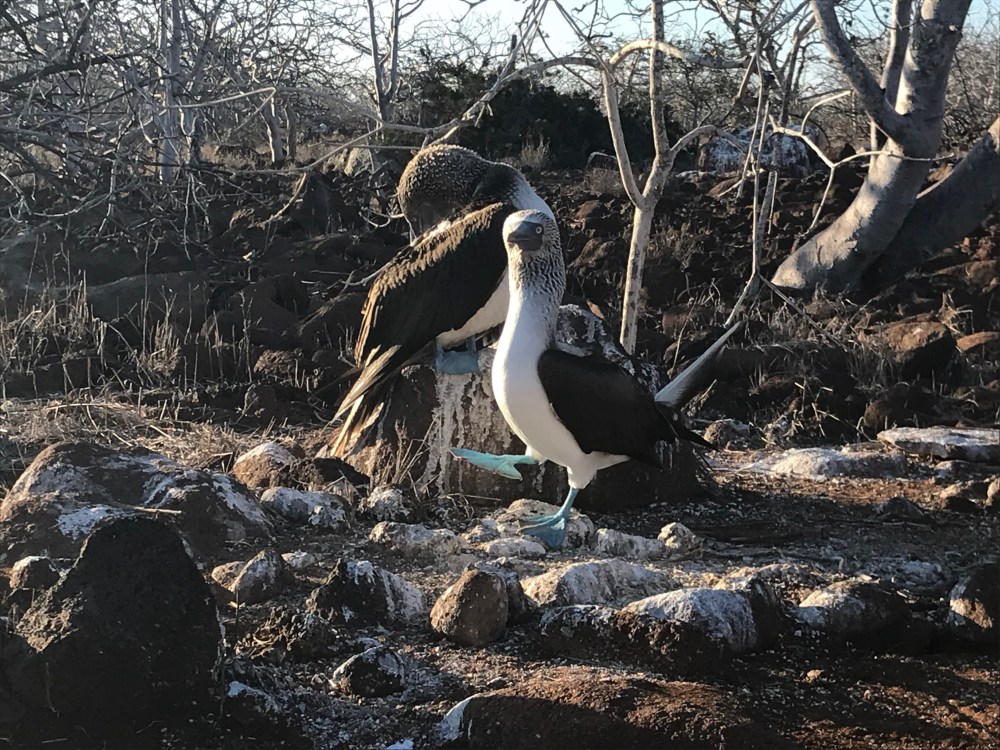
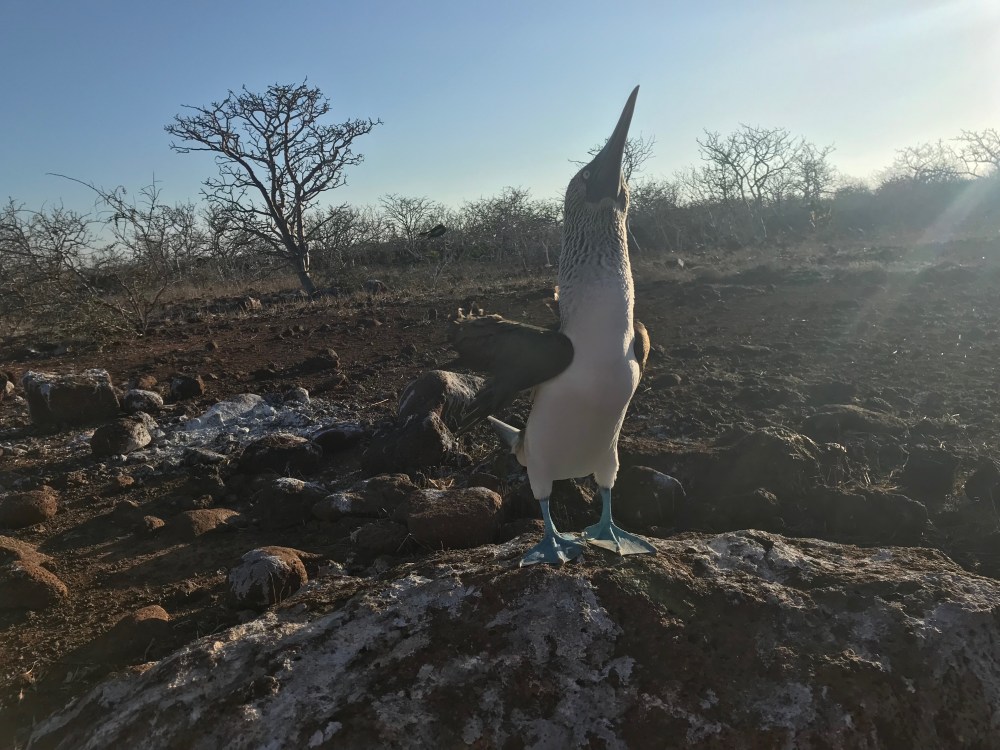
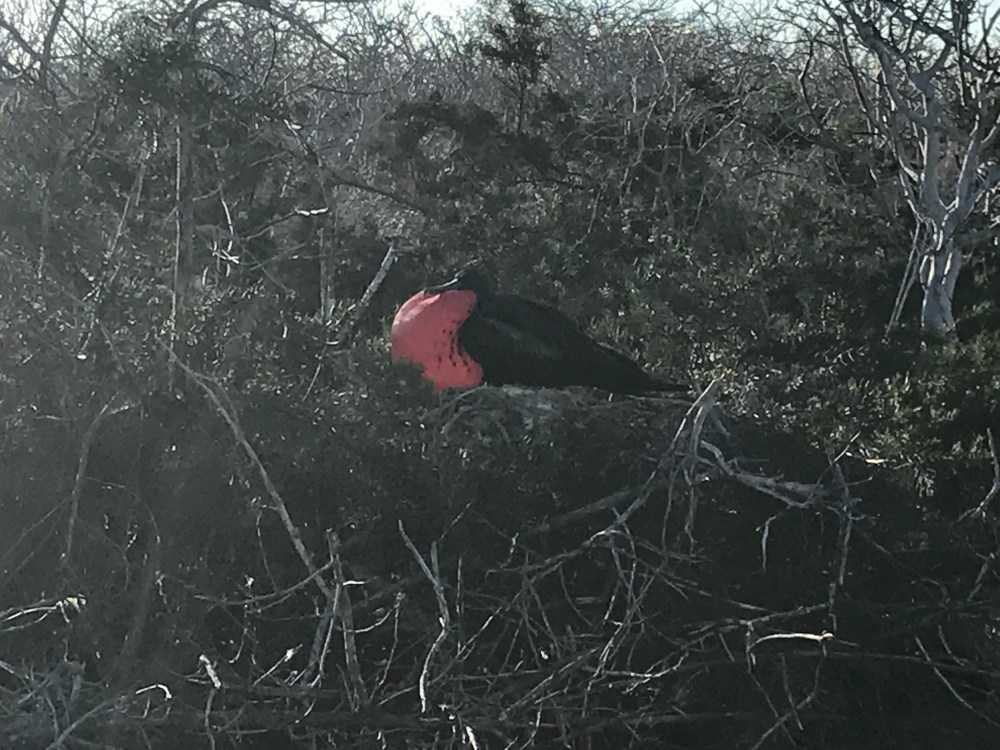
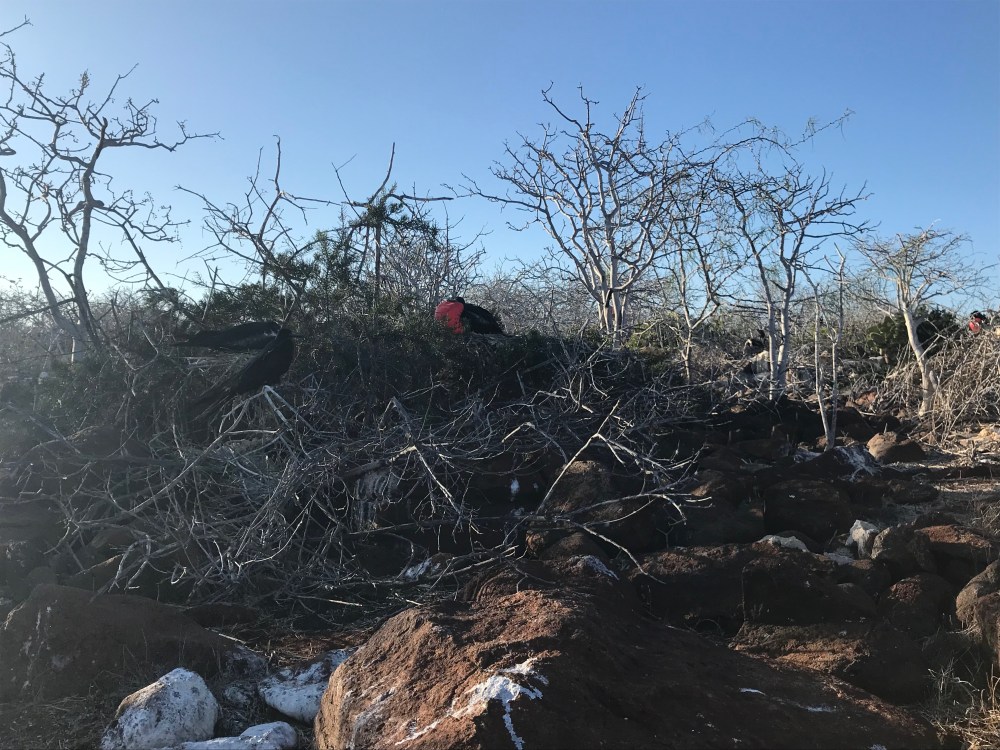
In addition to the large colony of blue footed boobies, we also ran into a large colony of frigate birds, which like the boobies, have an interesting mating ritual as well. The male frigate birds build a typical bird nest in a tree and bright and early in the morning they begin to inflate their large red pouches, which can take as long as three hours to fully inflate. The females then fly high above the nests to identify the birds with the biggest and brightest pouches. They swoop down to inspect their nests and if it meets their satisfaction, they mate.
After our morning hike, we returned to the Samba where we had our final meal, said our goodbyes and packed up and headed back to Puerto Ayora.

One Comment Add yours